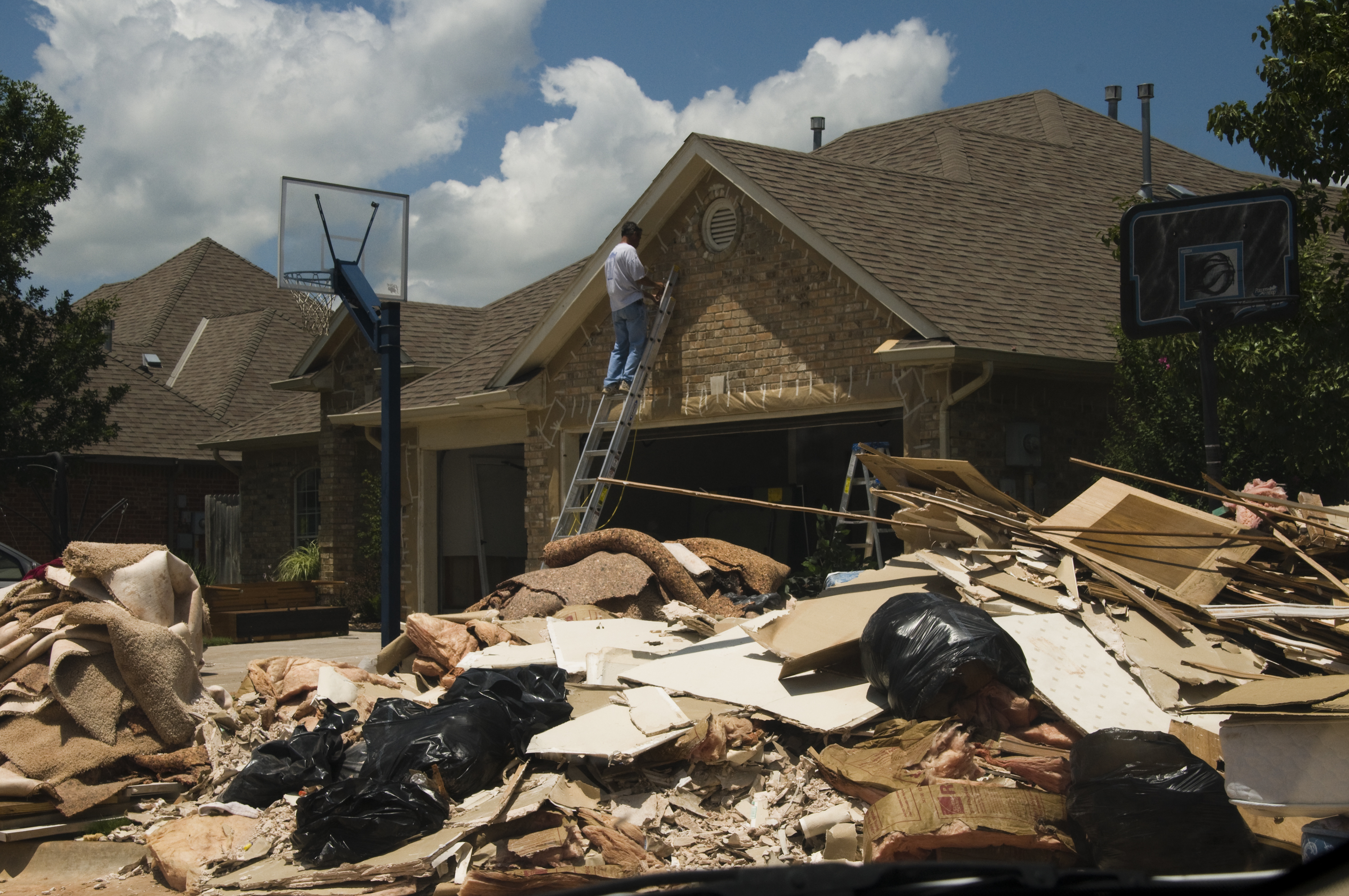
Homeowners in Madeira and across Hamilton County who are still cleaning up from July's back-to-back floods won't be getting federal disaster money.
The county's preliminary damage assessment fell short of FEMA's threshold, and now Cincinnati residents are waiting on a City Council vote Wednesday on a $1 million relief fund as their best remaining financial lifeline.
Hamilton County's assessment found 118 properties met FEMA's damage criteria after the July 17 storms and subsequent flooding on July 19 and July 21. Of those, 89 were residences and 29 were businesses. But only nine sustained major damage, eight in Cincinnati and one in Fairfax, and none were destroyed. FEMA requires at least 25 properties with major damage or destruction to trigger a disaster declaration.
"We knew going in that disaster eligibility was unlikely," Assistant Cincinnati Fire Chief Matthew Flagler said at Tuesday's City Council committee hearing, according to WVXU. "That sounds like we didn't have any impacts, or we had a very minimal event, and we know that's not true."
The gap between the formal assessment and reality is stark. MSD received nearly 2,000 reports of water intrusion after the July flooding. About 1,200 have been officially classified as sewer backups, meaning MSD bears responsibility for cleanup and property replacement in those cases. As we reported July 29, MSD fast-tracked 10 infrastructure projects in response.
What local relief looks like
The relief package totals $2 million, split into two funds. Mayor Aftab Pureval directed $1 million from previously allocated small-business support funds for business owners. That required no Council vote. A separate $1 million for residents does require approval and is scheduled for a Council vote on Wednesday, Aug. 5.
The resident fund, an emergency ordinance sponsored by Vice Mayor Kearney and seven councilmembers, would transfer $1 million from the city's General Fund "Reserve for Weather Events, Other Emergency and One-Time Needs" account, according to city council records. Both funds will be managed through MSD.
Residents who already filed a sewer backup claim with MSD do not need to apply separately. Those who haven't can call the city's flood relief hotline at (513) 323-7995, Monday through Friday, 7:30 a.m. to 4:30 p.m. As of Monday, Aug. 3, the hotline had received 67 calls, according to Assistant City Manager Cathy Bailey.
The bigger picture for east-side villages
The July 17 storms dropped five to six inches of rain over three hours, killing one person and injuring three others across Hamilton County. Madeira was among the hardest-hit communities, alongside Cincinnati, Fairfax, Norwood, St. Bernard and Silverton. Mayor Pureval declared a local state of emergency on July 21.
The FEMA denial affects the entire county, but the Cincinnati relief funds apply to city residents. Madeira and other east-side village homeowners outside city limits face the same insurance gap without the same local safety net. Only 26,000 Ohio homes carry National Flood Insurance Program coverage, a participation rate of 0.6%. Standard homeowners policies do not cover flood damage.
Councilmember Mark Jeffreys rejected the framing of these storms as rare events, noting at Tuesday's hearing that major flooding has struck in 2016, 2021, 2024 and now 2026.
On Tuesday, Aug. 4, the Climate, City Services and Infrastructure Committee voted to request a formal review of the city's flood response, including expanded green infrastructure and a Flood Resilience Task Force. A report with recommendations and cost estimates is due within 120 days.