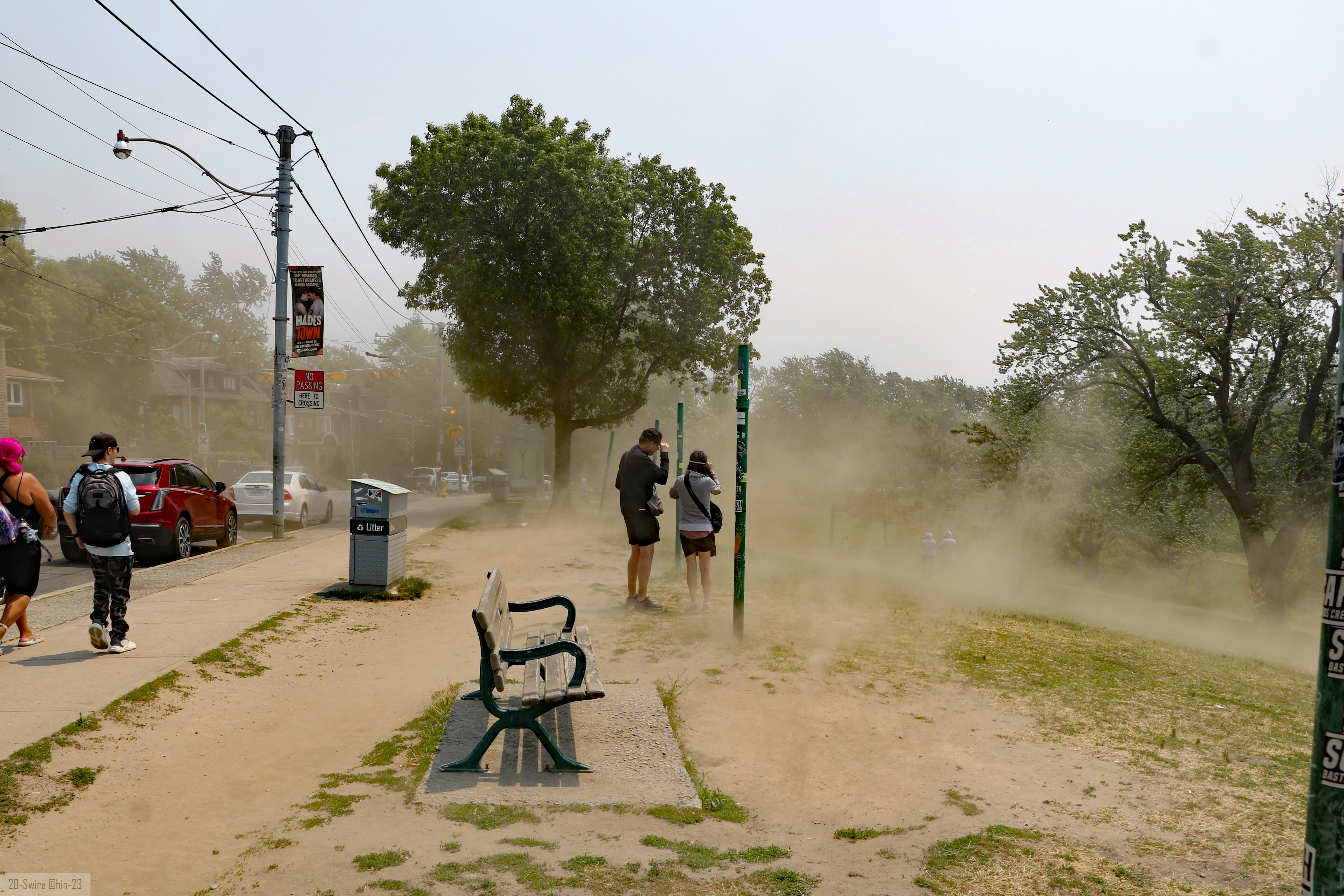
Canadian wildfire smoke pushed air quality into unhealthy territory across all of Ohio on Thursday, July 16, prompting a statewide air quality alert that covers Hamilton County and the east-side villages of Indian Hill, Madeira, Mariemont, Terrace Park, and Sycamore Township.
The alert, which took effect Thursday morning, coincides with a forecast heat index in the upper 90s for the Cincinnati metro area, compounding risks for residents with respiratory or heart conditions.
"The entire state of Ohio is under an air quality alert due to the wildfire smoke coming in from Canada," WLWT meteorologist Allison Rogers said during her Thursday morning broadcast. "You could start to notice a hazy sky, especially well off to the east. Keep that in mind, especially if you're somebody who is sensitive to when our air quality takes a dip."
What's causing it
More than 180 active wildfires burning in northern Ontario are the source of the smoke, according to NASA. Winds carried the plume southeast across the Midwest and Northeast, triggering air quality alerts in more than 20 states, the Guardian reported Thursday, July 16.
The U.S. EPA's air quality map showed parts of Ohio registering "unhealthy" to "very unhealthy" levels Thursday morning. Rogers said the Greater Cincinnati area would see haze but not the severe conditions affecting New England and the Mid-Atlantic.
Who is most at risk
The EPA identifies children, older adults, people with asthma or other respiratory conditions, people with heart disease, and pregnant individuals as the most vulnerable to wildfire smoke. Axios reported that Ohio health officials urged all residents to limit time outdoors while the smoke lingers.
Symptoms of smoke exposure include chest tightness, trouble breathing, wheezing, coughing, and burning in the nose, throat, and eyes. Anyone experiencing these symptoms should seek medical care, the EPA advises.
How to protect yourself
The EPA recommends these steps:
- Keep windows and doors closed.
- Avoid strenuous outdoor activity.
- Consider wearing an N95 respirator mask if you must go outside. Cloth masks and paper masks do not filter wildfire smoke.
- Keep pets indoors and limit their outdoor time. Birds are particularly susceptible.
- Check your local Air Quality Index at AirNow.gov by entering your ZIP code.
N95 masks are not designed to fit children, so the EPA advises against relying on them for kids.
When will it clear up
The National Weather Service said smoky conditions could persist into Friday, July 17. Rogers forecast scattered rain and storms beginning Friday afternoon, with a cold front pushing through Saturday, July 18, that could bring stronger thunderstorms with gusty winds. Sunday, July 19, is expected to be dry, and the shifting winds and rain should help clear the smoke.
No local police or fire agencies in the east-side villages had issued community-specific advisories as of Thursday morning. Residents can check AirNow.gov for real-time readings or call their local non-emergency line for guidance.