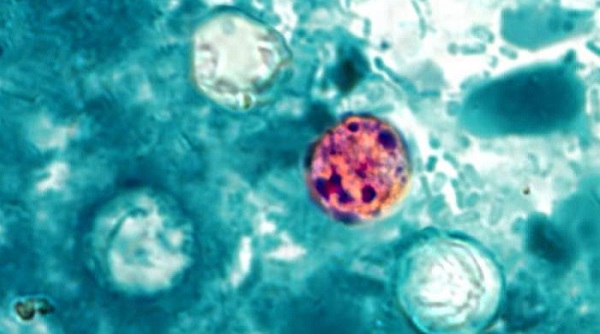
Hamilton County's cyclospora case count rose to 17 on Thursday, July 16, up from 16 on Tuesday, July 14, according to Hamilton County Public Health. Confirmed cases jumped from 10 to 12, while probable cases held steady and suspected cases dropped from five to four.
Beyond those 17 tracked cases, the county is seeing a broader wave. Hamilton County Public Health reported a "statistically significant increase" in people seeking care for gastrointestinal symptoms, with more than 40 residents treated for diarrheal illness regardless of whether they have a confirmed cyclospora diagnosis.
Ohio's statewide picture is far worse. The Ohio Department of Health's infectious diseases dashboard updated Thursday to show 1,274 confirmed cases, up from 364 the day before. Health officials said the jump largely reflects delayed reporting catching up rather than a single-day explosion of new infections. More than 40 Ohioans have been hospitalized. No deaths have been reported.
Nationally, the CDC reported 1,645 confirmed cases across 34 states as of Monday, July 13, with 141 hospitalizations and zero deaths. The agency said it is also aware of more than 5,100 additional suspected cases awaiting confirmation.
No source for the outbreak has been identified. Ohio Department of Health Director Dr. Bruce Vanderhoff said on Tuesday, July 15, that the illness appears linked to produce, particularly leafy greens and berries, but no specific farm, vendor, or product has been pinpointed.
"We don't know the source. So I think the answer is to approach all of your fresh fruits and vegetables as food that needs to be cleaned before you consume it," Vanderhoff told the Statehouse News Bureau on July 15.
Vanderhoff specifically recommended skipping bagged and prepackaged salads. Buy a whole head of lettuce so each leaf can be washed individually, he said. He also warned that locally grown Ohio produce could carry the parasite.
What residents should know
Cyclosporiasis is caused by the parasite Cyclospora cayetanensis, typically contracted through contaminated produce. It does not spread person to person. The most common symptom is watery diarrhea; other symptoms include bloating, cramping, nausea, fatigue, and weight loss. Symptoms can disappear and return over several weeks.
The illness is treatable with antibiotics, rest, and fluids. However, it may not show up on a standard stool panel. Gwen Biggerstaff, deputy director of the CDC's Division of Foodborne, Waterborne, and Environmental Diseases, urged patients to specifically ask their healthcare provider for a cyclospora test.
Hamilton County Public Health recommends:
- Wash hands with soap and water for at least 20 seconds before and after handling produce.
- Wash all fruits and vegetables under running water. Scrub firm produce like melons with a clean brush.
- Eat or refrigerate cut, peeled, or cooked produce promptly.
Residents who develop severe or recurring diarrhea should contact their healthcare provider. Hamilton County Public Health can be reached at 513-946-7800 or at hamiltoncountyhealth.org.